
LaSalle Parish Parole and Probation
Physical release and legal discharge are separate events. Parole permits a person to serve part of a state sentence outside a secure facility under conditions set through Louisiana’s parole system. Probation usually comes from a judge’s sentence. It may follow a suspended sentence or the custody portion of a split sentence. Both can place a released LaSalle Parish person under the Louisiana Department of Public Safety and Corrections, Division of Probation and Parole, but the legal source and record trail differ.
A LaSalle Parish Jail roster can show whether the sheriff currently reports someone in that jail. It does not identify every person on community supervision. Louisiana DPS&C says LAVNS includes people under probation, parole, or other community supervision. Court minutes are still vital because they can show a probation order, sentence terms, later revocation, or completion. For parole, the official Committee on Parole docket or ruling can document the release decision, while DPS&C information addresses the resulting custody or supervision status.
| Question | Parole | Probation |
|---|---|---|
| Where it begins | A state release decision or applicable statutory release status | A criminal judgment, often with a suspended or split sentence |
| Best first record | DPS&C/LAVNS status and Committee on Parole material | LaSalle Parish sentencing judgment and minutes |
| Who supervises | Louisiana DPS&C Division of Probation and Parole | The authority stated in the judgment, often the same division |
| What release means | Outside secure custody but still serving a sentence under conditions | Outside custody under court-imposed terms, if custody was imposed at all |
| How it ends | Discharge, completion, or another lawful status change | Court- or agency-recorded completion, discharge, or revocation |
- Parole
- Conditional community release during a sentence.
- Probation
- Court-ordered community supervision instead of, or after, part of a custodial sentence.
- Discharge
- The formal end of the custody or supervision status at issue.
- Absconder
- A supervision term that may describe a person whose whereabouts are unknown after failing to report; it requires official confirmation.
Verify LaSalle Parish Post-Release Supervision
Start with exact identifiers. A common name can point to the wrong person, and an old custody result can describe an earlier case. Use the DPS&C number when known. Otherwise compare the full name, date of birth when lawfully available, reporting agency, court docket, and last facility. Save the date and wording of the result. Louisiana’s public state data can update after an agency transmits a change, so the search time matters.
- Search the LaSalle Parish LAVNS roster and Louisiana VINELink with the strongest identifier available. Read the reporting agency and live status rather than relying only on a name match.
- If the person left LaSalle Parish Jail, use the sheriff’s jail and records contacts to ask whether the jail recorded community release or a transfer. A roster disappearance alone cannot separate those outcomes.
- Contact the responsible Probation and Parole district. The Alexandria office is the nearest official listing found, but confirm that it handles the LaSalle Parish case before relying on it.
- For probation, request the sentencing judgment and relevant minutes from the LaSalle Parish Clerk of Court. For parole, check the official board docket or ruling tied to the person and hearing date.
- When the online record no longer appears, request the public discharge category from DPS&C or the completion record from the court. State precisely which supervision term and case are at issue.
The main released-person workflow and local movement-record path are covered on the LaSalle Parish released inmates search. That local exit record and the state supervision result answer two distinct parts of the same timeline.
Note: A court order authorizes or defines a status, while the jail or DPS&C record is stronger evidence of the actual custody change.
LaSalle Parish Supervision Office Route
The official district directory did not expressly assign LaSalle Parish to a specific Probation and Parole office during the research. It listed Alexandria as the nearest regional contact found. That distinction must stay clear. Call first, ask whether the office holds the case, and request the correct district if it does not. A courthouse listing for LaSalle Parish is not proof that a Probation and Parole district office operates there.
Nearest Listed Probation and Parole Office
Louisiana DPS&C Division of Probation and Parole
2800 South MacArthur Drive, Suite F
Alexandria, LA 71301
318-487-5301
Confirm territorial responsibility for LaSalle Parish by phone before visiting or sending a case-specific request.
Ask only for information the office may lawfully disclose. Provide the person’s name, DPS&C number if known, date of birth when appropriate, and the LaSalle Parish docket or sentencing court. Do not ask staff to infer identity from a vague name. If the person is fully discharged and no public status remains visible, the department’s public-record channel is the better route for a discharge date under R.S. 15:574.12(G).
LaSalle Parish Parole Reporting Timeline
Louisiana’s published parole conditions supply a concrete early schedule after release. A parolee must report to a Probation and Parole office no later than 48 hours after release, then submit a monthly report by the fifth and follow any other reporting directions. These are general conditions. They help explain why a community-supervision entry may appear soon after a physical release, but they do not prove that a named person reported or met every term.
A supervision record should be read with its source date. If the LaSalle Parish movement record shows an exit on one day and LAVNS later shows community supervision, the two records can form a consistent sequence. The local record documents leaving the jail. The state record documents the legal status that followed. Any gap between them may reflect normal processing, a reporting deadline, or data transmission. It should not be filled with an assumption.
When a family member or authorized person needs the correct reporting location, the supervising office controls. Conditions may include reporting, travel limits, approved residence terms, or other directions in the release documents. Public summaries should remain high level because individual terms vary. The released person’s written instructions and supervising officer are the operative sources.
Note: The 48-hour and monthly reporting rules explain the standard timetable, not the conduct or compliance of any identified LaSalle Parish person.
LaSalle Parish Parole Dockets and Rulings
The Louisiana Board of Pardons includes the Committee on Parole, which decides parole matters. Its hearings are open to the public and conducted through published remote access methods. A docket entry means the case was scheduled for consideration. It does not prove that parole was granted, that release processing finished, or that another hold did not intervene.
The official Board of Pardons and Committee on Parole page leads to current schedules, agendas, and rulings. The observed schedule used several hearing weeks in a month, so an old agenda should not be treated as a standing calendar. If a ruling cannot be located, contact the board with the person’s name, DPS&C number, and hearing date.
The official board source shown below helps distinguish a parole proceeding from a LaSalle Parish probation judgment.
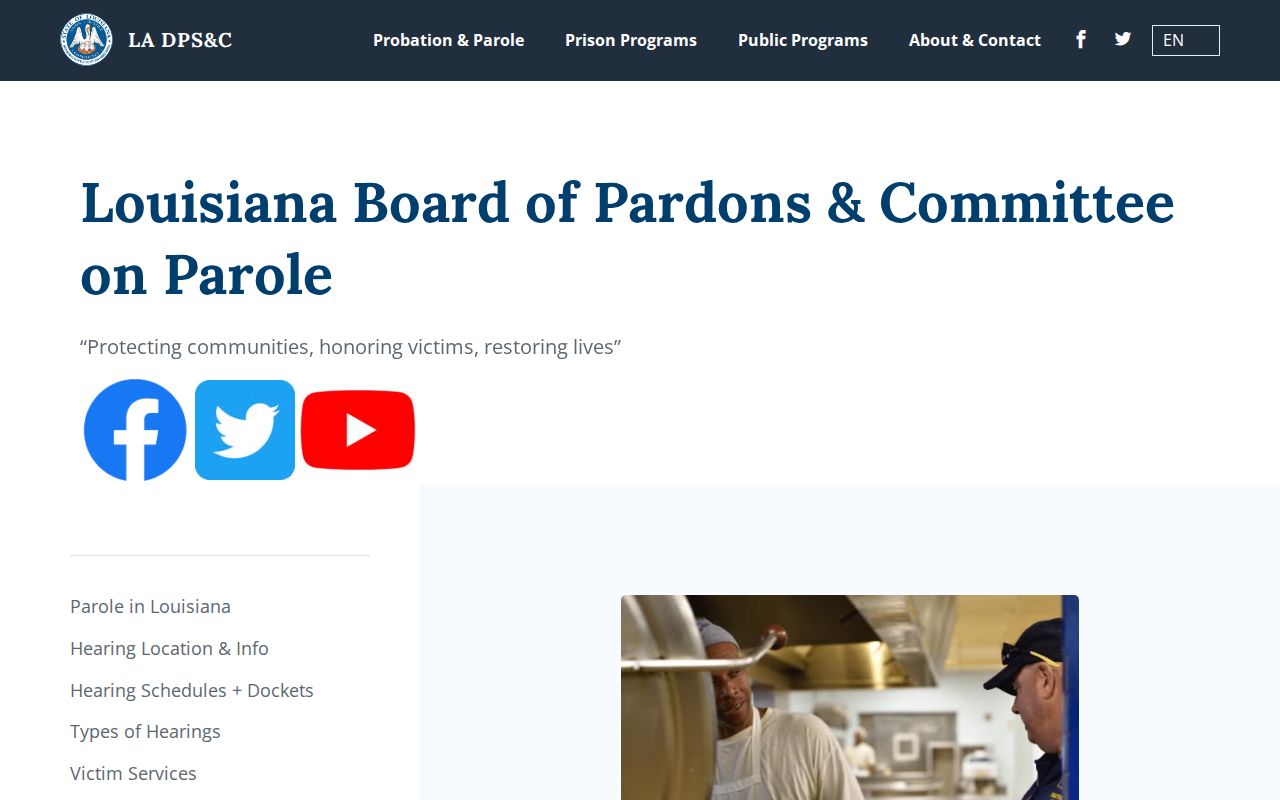
The board page is evidence of the decision channel; actual exit and later supervision still require DPS&C or facility confirmation.
LaSalle Parish Supervision Violations
A violation allegation is not a final revocation. A parole matter may involve a warrant, preliminary process, a revocation hearing, and a Committee on Parole ruling. Probation consequences come through the sentencing court and supervising authority. The exact path depends on the status and case. A new arrest can begin another custody episode without itself proving that the prior supervision was revoked.
No official LaSalle-specific or statewide public Probation and Parole absconder database was verified. A person’s absence from a most-wanted page therefore proves nothing. To check a reported warrant or absconder status, match the live DPS&C or court source and contact the responsible office. Do not translate a social post, rumor, or stale roster entry into a current legal conclusion.
| Observed information | What it can support | Required follow-up |
|---|---|---|
| Community-supervision result | The reporting agency currently shows supervision | Match identifiers and query date |
| Parole hearing docket | A hearing was scheduled | Find the ruling and confirm actual release |
| Violation warrant report | A lead that official process may exist | Verify with the supervising authority or court |
| New jail booking | A new custody event | Check the new charges and the separate revocation record |
| Name no longer visible | No current result in that search | Request the discharge or completion record |
Note: Status terms have legal effects, so quote the agency’s wording and avoid broad labels that the source itself does not use.
When LaSalle Parish Supervision Ends
Leaving a facility does not end a sentence by itself. Supervision ends through the discharge or completion route that applies to the judgment and release status. For probation, the LaSalle Parish court file may contain a completion, satisfaction, revocation, or later order. For parole or another DPS&C status, seek the department’s discharge date and match it to the same person and sentence.
Louisiana corrections files are not wholly public. Still, R.S. 15:574.12(G) identifies categories available on request, including disposition and incarceration information, conviction details, sentence length, and discharge date. A narrow request for the discharge date is stronger than demanding an entire supervision file. It also reduces the risk of confusing protected case material with the public fact needed to verify the end of supervision.
Keep the evidence chain intact: local release or movement record, court judgment or parole decision, current supervision source, and final discharge or completion record. Each answers a specific question. Together they can show when LaSalle Parish custody ended, why community supervision applied, and when that later legal status concluded.